Services
Seven
disciplines.
Each service below is described by its purpose, typical scope, our approach, and the deliverables an engagement can produce. Services are frequently combined; the boundaries are a way of describing work, not a catalogue of fixed packages.
- 01Custom software development
- 02Web application development
- 03Cloud solutions
- 04API and systems integration
- 05UI/UX design
- 06Quality assurance
- 07Software maintenance and modernisation
01Service
Custom software development
To support a process that no standard product fits, where the organisation's own rules, data or workflow are the reason the software exists.
Typical scope
- Internal operational and back-office applications
- Domain-specific calculation, reporting and tracking systems
- Backend services and data models behind existing interfaces
- Replacement of spreadsheet-driven or manual processes
Approach
Domain modelling in the client's vocabulary, a written specification with acceptance criteria, then incremental construction beginning with a thin end-to-end slice that proves the architecture before depth is added.
Potential deliverables
- Source code with full repository history
- Automated test suite and continuous integration configuration
- Architecture notes and decision records
- Deployment and operations documentation

02Service
Web application development
To deliver browser-based systems that work reliably across devices and connection qualities, and remain accessible and maintainable as they grow.
Typical scope
- Customer-facing platforms and portals
- Administrative and internal web interfaces
- Authentication, roles and permission models
- Content structure, search visibility and server-rendered pages where appropriate
Approach
Component architecture with explicit state boundaries, rendering strategy chosen per route, performance budgets applied to assets and images, and accessibility criteria written into each screen's definition of done.
Potential deliverables
- Responsive web application with a documented component set
- Accessibility and performance check results
- Environment configuration for staging and production
- Editor or administrator guidance where relevant
03Service
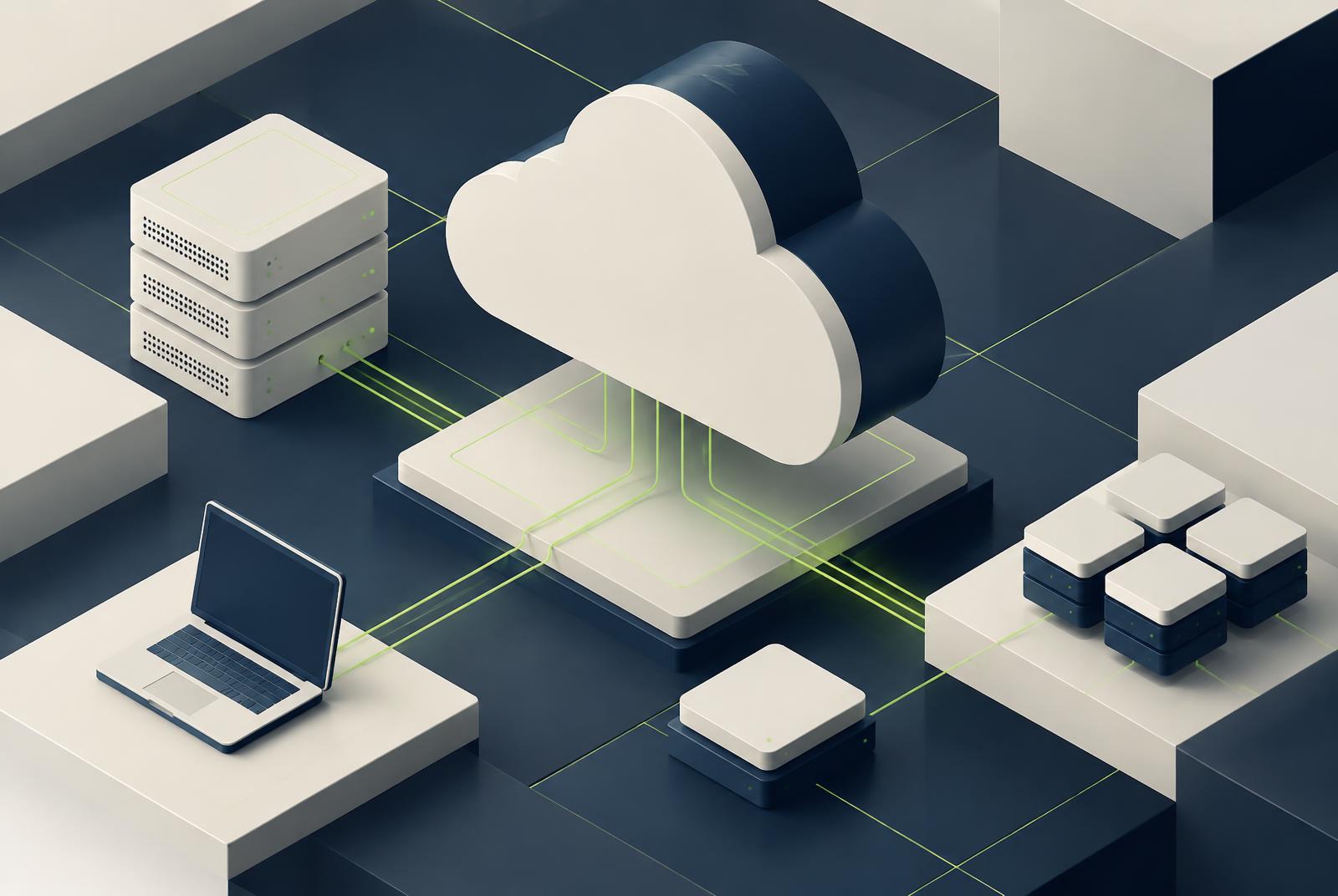
Cloud solutions
To give a system an environment that can be rebuilt from its definition, observed while running, and changed without guesswork.
Typical scope
- Environment and network design, access boundaries
- Container and runtime configuration
- Data storage, backup and restore strategy
- Deployment pipelines, monitoring, logging and alerting
Approach
Infrastructure described as code and versioned alongside the application. Sizing follows measured demand, cost is treated as a design constraint, and recovery procedures are rehearsed rather than assumed.
Potential deliverables
- Infrastructure definitions and environment documentation
- Automated deployment pipeline with a rollback path
- Dashboards, alert rules and an on-call runbook
- Documented backup and restore procedure

04Service
API and systems integration
To let existing systems exchange data reliably, removing manual re-entry and the inconsistencies it produces.
Typical scope
- REST and webhook interfaces, message queues, scheduled batch and file transfers
- Data mapping between systems with differing models
- Source-of-truth definition and record matching rules
- Reconciliation, monitoring and error reporting
Approach
An integration map agreed before any connector is written: ownership of each entity, identifiers, duplicate handling and failure escalation. Operations are made idempotent, retries are bounded, and failed messages are captured for inspection.
Potential deliverables
- Integration services and transformation logic
- Interface documentation and data mapping tables
- Reconciliation reports and failure alerting
- Test harness covering error and retry paths
05Service
UI/UX design
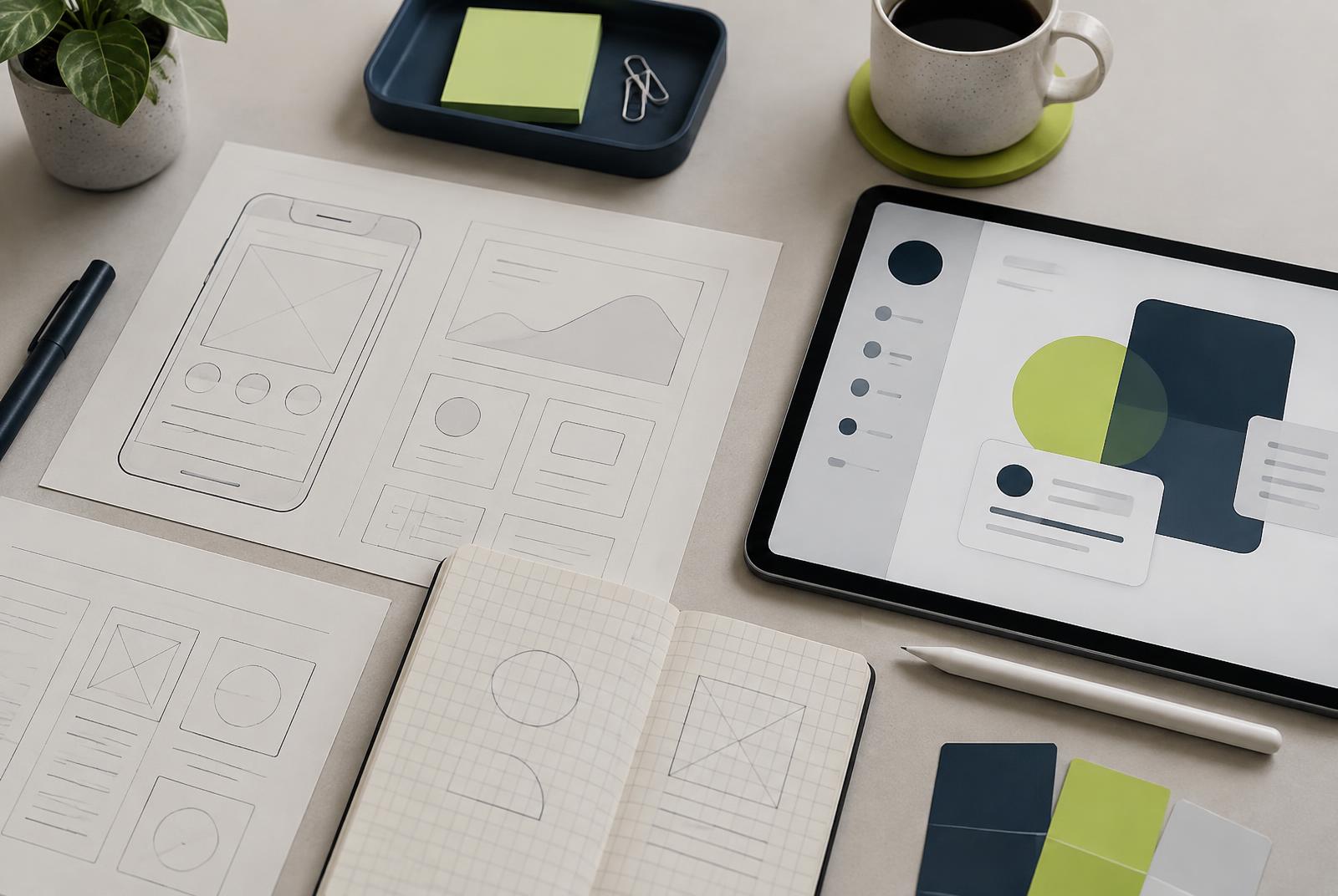
To reduce the effort a task demands and the number of ways it can be performed incorrectly.
Typical scope
- Task analysis and information architecture
- Flows, wireframes and interaction specification
- Visual design system and reusable components
- Accessibility criteria for screens and states
Approach
Low-fidelity exploration first, so structure can be discussed and discarded cheaply. Visual design follows agreed structure, and every component is specified with its empty, loading, error and disabled states.
Potential deliverables
- Task flows and annotated wireframes
- Interface specifications and component library
- Design tokens aligned with the implemented front end
- Written accessibility acceptance criteria

06Service
Quality assurance
To keep the cost of change low, and to make regressions visible before users encounter them.
Typical scope
- Test strategy covering unit, integration and end-to-end levels
- Continuous integration, static analysis and dependency checks
- Exploratory and acceptance testing against written criteria
- Defect triage, reproduction and regression coverage
Approach
Tests are written with the feature, not after it. Defects are reproduced and captured as failing tests before they are fixed, so the same fault cannot return unnoticed.
Potential deliverables
- Test strategy document and automated suites
- Pipeline configuration with quality gates
- Test reports and coverage summaries
- Defect register with reproduction steps
07Service
Software maintenance and modernisation
To stabilise and gradually improve systems that still deliver value but have become slow, risky or expensive to change.
Typical scope
- Assessment of an existing codebase, its dependencies and its operations
- Dependency and platform upgrades, security patching
- Incremental refactoring and characterisation testing
- Selective replacement of components behind stable interfaces
Approach
Read and document before changing. Behaviour is captured in tests first, then modules are replaced in increments behind stable interfaces, so the system remains releasable throughout rather than depending on a single cut-over.
Potential deliverables
- Assessment report with prioritised findings
- Characterisation test suite around existing behaviour
- Upgraded, documented and monitored system
- Maintenance plan for dependencies and routine work
Company information
Discussing a piece of work
Describe the problem, the systems involved and the outcome you are aiming for. Pricing and terms are agreed per engagement and are not published on this site.
WeQ Sports GmbH
kareycoffin760@gmail.com
weqsports.com